The Eveness Journal
Why Are Midi Dresses So Popular? A Complete Style Guide
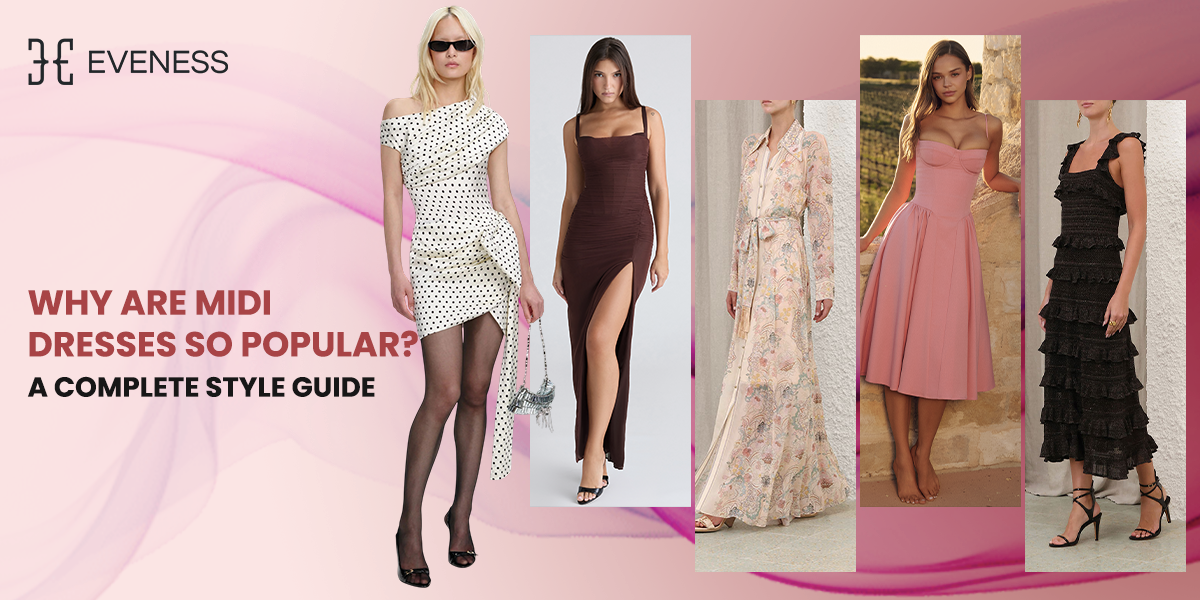
Midi dresses have become a trusted choice in wardrobes. They bring together comfort, coverage and style in one shape. The hem of a midi dress usually falls between the knee and the ankle. That makes it a smart middle ground between dresses and full-length ones.
So why are midi dresses popular? It comes down to versatility. One midi dress can fit different moments. It works for an afternoon a busy office day, dinner, a wedding or even a holiday trip. The fabric and styling make all the difference. Whether its a linen midi dress or a tight tailored version there’s a midi for almost every need. midi linen dresses for women are also a popular choice for warm-weather styling, while convertible dress styles offer even more flexibility.
What Is a Midi Dress. How Does Its Length Compare With Other Dresses?
A midi dress is mainly defined by its length. It sits below the knee but above the ankle. The exact spot depends on how tall the person's how the dress fits. Unlike terms like wrap, A-line, fitted or shirt dress "midi" refers to length, not shape.
Midi dresses end above the knee. Knee-length dresses stop at the knee. Maxi dresses go farther down, often to the ankle or even the floor. Midi dresses fall in the middle. This gives them coverage without the bulk of longer styles.
The same midi dress can look completely different on people. Height, waist placement, body proportions and shoes all affect how the hem lands. That middle-length cut offers both comfort and movement. It also creates a look that works for many situations.
Why Do Midi Dresses Offer Such a Good Balance of Comfort and Style?
Midi dresses solve a problem: finding something that feels good but still looks put together. The length covers more than dresses do yet doesn’t restrict motion. Different fabrics and shapes let wearers choose between laid-back and elegant styles.
Benefits of Midi Dresses for Everyday Wear
A fitting midi dress stays comfortable through long days. The extra fabric provides coverage when walking, sitting, commuting or running around. Materials like cotton, linen, viscose and light blends add softness and ease of movement.
A linen midi dress is especially useful in months. It breathes well. Keeps you cool. At the time it gives more coverage than a very short summer dress. That makes it ideal for daytime outings or casual events.
Benefits of Their Versatility
Midi dresses work for a range of settings. They suit trips, offices, travel, dinners, weddings and social gatherings. A simple outfit with sneakers and a small bag feels effortless. The same dress can take on a tone with a blazer, structured bag and loafers.
Benefits of a Timeless Silhouette
The midi length doesn't depend on trends. Its proportions go well with romantic, tailored and current looks. That means it fits naturally into a capsule wardrobe. It also lasts longer because it doesn’t feel outdated quickly.
Which Types of Midi Dresses Work Best for Different Styles and Occasions?
The popularity of midi dresses also comes from their variety. The length stays similar. Changes in neckline, waist, skirt shape, fabric and details create entirely new styles.
Wrap Midi Dresses
Wrap midi dresses use overlapping fabric and an adjustable waist tie. This makes them easy to adjust and comfortable. They work well for events, office wear, dinners and dressing up from day to night.
A-Line Midi Dresses
A-line midi dresses are narrow at the waist. Widen toward the bottom. This adds flow without needing a fit. Depending on the fabric they can be casual or dressy.
Shirt Midi Dresses
Shirt midi dresses include elements like collars, buttons, cuffs and belts. These features give them a clean look. They’re great for casual and professional settings.
Fitted Midi Dresses
Fitted midi dresses follow the body closely. They often look sleek. Are perfect for dinners, parties or evening events. Fabrics with some stretch make them easier to move in.
Pleated and Knit Midi Dresses
Pleats add texture and movement. They give a plain midi dress visual interest. Knit midi dresses offer softness and flexibility. They’re practical for wear and cooler weather.
Floral and Printed Midi Dresses
Floral prints can feel feminine or dreamy. Abstract and geometric designs bring an edge. When the print is bold it’s best to keep accessories simple to avoid looking too busy.
How Can You Style a Midi Dress for Different Occasions and Seasons?
Styling plays a role in changing how a midi dress feels. Shoes, layers, bags, jewelry and fabric choices help transform one silhouette into looks.
How to Style a Midi Dress Casually
For wear pair a midi linen dresses for women with sneakers flat sandals, ballet flats or low boots. Add a jacket, cardigan or relaxed overshirt for extra layering.
How to Style a Midi Dress for Work
At work go for lines neutral colors and sturdy fabrics. Add a tailored blazer, loafers, pumps or polished flats. After work switch the shoes. Drop the blazer. Suddenly the same dress works for dinner or a night out.
How to Style a Midi Dress for Weddings and Events
For weddings and special events choose materials like satin, lace or pleated fabric. Heels, statement earrings or a small handbag add elegance. Keep things stylish without making the outfit too formal.
How to Style a Midi Dress Throughout the Year
In weather, cotton, linen and viscose work well. For months add ankle or knee-high boots, cardigans, jackets, knit layers or coats. This way one dress stays useful through every season.
Finding the Right Midi Dress for Your Body Shape and Height
There is no perfect midi length for everyone. Waist placement, hem position, fit, footwear and personal taste all matter.
Petite figures benefit from defined waists, vertical lines and clean silhouettes. If a dress feels long minor adjustments can help it look better.
Taller people can wear midi lengths. Hems that sit lower on the calf often look natural and flattering.
For bodies, wrap and A-line convertible dress styles are good options. They highlight the waist while letting the skirt move freely.. These are just starting points. Fitted, straight or flowing styles can work too.
For straighter frames consider structured, belted, fitted or flowing cuts. Choose based on the look you want.
When shopping online check measurements. Don’t rely on size labels. Compare your dress’s bust, waist, hip and total length to the new one. This helps you pick the fit.
Ready to See Why Midi Dresses Are So Popular? Explore Eveness AI
That flexibility explains why many shoppers love this style. Midi dresses stay popular because they mix length, comfort, freedom of movement, styling options and year-round use.
They come in shapes. There’s no one way a midi should look. It can be casual, professional, romantic, minimal or event-ready.
The right fabric extends its usefulness across seasons. Shoes and accessories change the look without needing a whole new outfit. That makes the midi dress a smart investment for anyone who values clothing.
At Eveness AI you can explore midi dress styles made for different tastes and moments.
If you want a dress that goes from morning errands to work, travel, dinners or parties check out Eveness. Find a midi dress that matches your style.
Frequently Asked Questions
1. Why are midi dresses popular?
Midi dresses are popular because they offer a length, flexible styling and a polished appearance. They work for work, casual outings, weddings, dinners and travel.
2. What is a midi dress?
A midi dress is a dress with a hemline that usually falls between the knee and the ankle— around mid-calf. The term describes length, not the style or shape.
3. Are midi dresses flattering for all body types?
Yes midi dresses can flatter body types. Wrap, A-line fitted, shirt and flowing styles give ways to achieve a balanced and comfortable fit.
4. How do you style a midi dress?
You can style a midi dress with sneakers or sandals for looks. Use. Pumps, for work. Go with heels or boots for dinner or special occasions.
5. Can you wear midi dresses in every season?
Yes midi dresses can be worn all year. Choose linen, cotton or viscose for weather. In months add boots, cardigans, jackets or coats.